Monday, 31 October 2022

Malaysia mulls Anwar’s last chance to rule

Opposition icon says coming polls will be his last as new-generation leader Rafizi Ramli proving to be a worthy successor


Malaysia’s political reformers, now seemingly accustomed to defeat after losing power more than two years ago, are holding out hope for another surprise win when the country goes to the polls on November 19. While victory for the Pakatan Harapan (PH) opposition coalition is not inconceivable, it will certainly be a tall order.

Opposition leader Anwar Ibrahim, 75, has acknowledged the coming polls will be his last attempt at becoming prime minister, an office that has long eluded the leader of Malaysia’s “reformasi” movement. Anwar has hinted he will retire to allow a younger generation of leaders to sustain and lead his party’s struggle if he falls short at next month’s election.

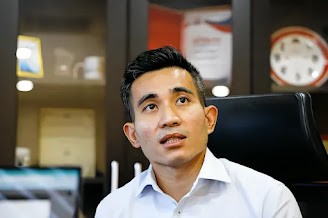
Among them is a figure already seen as his potential successor: 45-year-old Rafizi Ramli, a former Petronas executive turned tech entrepreneur known for his sometimes testy ties with Anwar. He was elected as Parti Keadilan Rakyat’s (PKR) deputy president in May, comfortably beating out a loyalist candidate backed by Anwar, who retained the party presidency unopposed.

“Sometimes I don’t necessarily see eye-to-eye with Anwar,” said Rafizi, who spoke with Asia Times earlier this year. During an interview in June, Rafizi said that “political disillusionment” born of PH’s short-lived tenure in government and Anwar’s failed subsequent bids to return to power would be the opposition’s biggest electoral hurdle.

Read the full story at Asia Times.

Nile Bowie is a journalist and correspondent with the Asia Times covering current affairs in Singapore and Malaysia. He can be reached at nilebowie@gmail.com.

Friday, 14 October 2022

Singapore dollar the world’s other safe haven

Singapore’s central bank tightens monetary policy in move expected to buoy one of Asia’s already best-performing currencies


In the latest salvo in its fight against inflation, Singapore’s central bank tightened monetary policy on Friday (October 14), allowing the national dollar to appreciate to curb domestic cost pressures in a move likely to bolster the currency’s increasingly favored status as it demonstrates resilience against the fast-appreciating US dollar.

The Monetary Authority of Singapore (MAS) said in a statement that it would raise the mid-point of the Singapore dollar policy band “up to its prevailing level,” a less aggressive move than some observers expected. Specifically, MAS refrained from adjustments to the slope or width of the currency band, both closely watched policy tools it could have used.

The MAS uses exchange rates, managed against a trade-weighted undisclosed basket of currencies from Singapore’s major trading partners, as its primary monetary policy tool to ease import costs, the main contributor to inflation in a city-state that imports almost everything it consumes, leaving domestic interest rates to shadow those of the US Federal Reserve.

“By not changing the slope of the band, [the MAS] took the calibrated approach of not allowing the pace of currency appreciation to quicken further. This is especially given the fact that the Singapore dollar is already one of the strongest performing currencies against the US dollar so far this year,” said Cheryl Chan, senior vice president for capital markets at digital securities exchange ADDX.

Read the full story at Asia Times.

Nile Bowie is a journalist and correspondent with the Asia Times covering current affairs in Singapore and Malaysia. He can be reached at nilebowie@gmail.com.

Monday, 10 October 2022

Ismail floods Malaysia with cash then calls snap polls

Malaysian leader flip-flops his position by calling early elections just days after tabling nation’s biggest-ever ‘feel good’ budget


Malaysia is headed toward a controversial early general election at a time when parts of the nation are expected to face heavy flooding due to monsoon rains. Prime Minister Ismail Sabri Yaakob confirmed the dissolution of parliament in a televised address on Monday (October 10), paving the way for snap polls to be held within 60 days.

The announcement follows days of speculation that the legislature would be dissolved soon after the tabling of the biggest-ever Malaysian government budget worth 372.3 billion ringgit (US$80 billion) for 2023 on October 7. The record spending plan has not yet been passed, raising questions about the country’s fiscal roadmap in the event of a change in government.

Elections could have been held at the latest by September 2023, but Ismail has been under intense pressure from his United Malays National Organization (UMNO) to call an early vote to capitalize on recent state election victories by the ruling Barisan Nasional (BN) coalition and get ahead of economic headwinds that are expected to worsen next year and potentially hit UMNO and BN’s popularity.

The premier said that by dissolving parliament, the public will have a chance to cast off years of political uncertainty by voting in a new, more stable government. But by rushing to hold an election, Ismail is disregarding flood warnings from Malaysia’s Meteorological Department and advice from climate experts who recommend that polls should be held only after the monsoon season.

Read the full story at Asia Times.

Nile Bowie is a journalist and correspondent with the Asia Times covering current affairs in Singapore and Malaysia. He can be reached at nilebowie@gmail.com.

Friday, 7 October 2022

Top lawyer who busted Najib faces vengeful legal fire

Ex-Attorney-General Tommy Thomas under investigation on PM Ismail’s orders for claims and allegations made in his best-selling memoir


Tommy Thomas, the lawyer who set in motion the landmark prosecution and ultimate imprisonment of an ex-prime minister for massive corruption, could be regarded as Malaysia’s most consequential attorney-general. But a new government probe into a book he published about his time as the nation’s top prosecutor is widely seen as a setback for good governance and the fight against graft.

Prime Minister Ismail Sabri Yaakob ordered an investigation into possible misconduct by Thomas, who served as attorney-general between 2018 and 2020, on September 30, instructing enforcement agencies to further probe various allegations made in his memoir, My Story: Justice In The Wilderness, which sparked a right-wing backlash after its publication last January.

More than 100 police reports were reportedly lodged after the book’s publication. The 500-plus-page memoir shed light on Thomas’ decisions that led to the charges leveled against ex-premier Najib Razak for his role in the multi-billion-dollar 1Malaysia Development Berhad (1MDB) scandal, among other high-profile cases.

The former private lawyer-turned-government top counsel and public prosecutor was questioned by police about the book, but the Attorney-General’s Chambers did not press charges, nor was the memoir banned. It has since become a national best-seller. But that didn’t stop Ismail from forming a special task force last December to investigate the book and its various revelations and allegations.

Read the full story at Asia Times.

Nile Bowie is a journalist and correspondent with the Asia Times covering current affairs in Singapore and Malaysia. He can be reached at nilebowie@gmail.com.

Tuesday, 27 September 2022

The many ills plaguing Singapore’s chipmakers

Global headwinds, hiring woes and spiking energy prices are conspiring to stunt the city-state’s semiconductor aspirations


Robust demand for Singapore’s electronics and semiconductors during the pandemic fueled the city-state’s fastest economic expansion in over a decade and big-ticket investments in chip-making capacity. Now, the notoriously cyclical semiconductor industry is in the grip of a deepening downturn as geopolitical and inflationary headwinds buffet the global economy.

Chip makers in the island nation are increasingly concerned about the near-term possibility of a recession, with many feeling the sting of soaring electricity prices linked to energy market disruptions worsened by Russia’s war on Ukraine. Singapore-based semiconductor and related firms are also contending with a tight domestic labor market and regulations that have raised the cost of and otherwise discouraged hiring foreigners.

“What is happening with Ukraine, with the shutdowns in China…when the uncertainty of a possible recession is coming up, or even stagflation in some countries, there is a fear that consumer demand will start to drop. Of course, this will have a direct impact on chip demand,” said Ang Wee Seng, executive director of the Singapore Semiconductor Industry Association (SSIA).

Faltering global demand is already being acutely felt in Singapore, with manufacturing sector growth falling to an 11-month low in August. All sector segments saw a fall in output, led by a 19.3% slide in the production of modules and components. It marked the third straight month of contraction in semiconductor production; the broad electronics sector has shrunk for two consecutive months.

Read the full story at Asia Times.

Nile Bowie is a journalist and correspondent with the Asia Times covering current affairs in Singapore and Malaysia. He can be reached at nilebowie@gmail.com.

Thursday, 8 September 2022

UMNO split widens on ‘free Najib’ rally cry

Divisions inside Malaysia’s ruling party over ex-premier’s fate could hit a breaking point ahead of pivotal general elections


Former Malaysian prime minister Najib Razak’s jailing for corruption has accentuated a deepening divide inside the ruling United Malays National Organization (UMNO), one that threatens a party-splitting schism with new general elections on the horizon. One UMNO camp seeks to distance itself from the newly incarcerated but still influential ex-leader, while a rival faction embraces his “justice denied” narrative, a persecution theme analysts expect it to play up to win votes on the hustings.

Prime Minister Ismail Sabri Yaakob appears to prefer looking forward and forgoing the politics of grievance in favor of economic deliverables. The premier is expected to personally table what will be the country’s largest-ever national budget next month, which analysts say is likely to presage the dissolution of parliament and calling of early elections.

UMNO president Ahmad Zahid Hamidi, on the other hand, has made clear he is backing Najib to the hilt. Observers speculate that the party leader, who faces a possible corruption and money laundering conviction that could likewise send him to prison, intends to engineer Ismail’s removal after an expected election victory in his capacity as the Barisan Nasional (BN) governing coalition’s chairman.

“Zahid and Najib remain very influential within the UMNO party hierarchy,” said Francis Hutchinson of the Malaysia Studies Program at Singapore’s ISEAS-Yusof Ishak Institute. “The party machinery has publicly come out in favor of Zahid and Najib, and the ‘old guard’ is sending out the message that aspiring candidates for parliament need to toe the line if they want to be fielded.”

Read the full story at Asia Times.

Nile Bowie is a journalist and correspondent with the Asia Times covering current affairs in Singapore and Malaysia. He can be reached at nilebowie@gmail.com.

Thursday, 25 August 2022

Najib-era ship scandal resurfaces to sink UMNO

Taking a page out of the 1MDB scandal, imprisoned ex-premier is implicated in a similarly massive naval corruption accusation


Another day, another multibillion-dollar corruption scandal in Malaysia. 1Malaysia Development Berhad (1MDB), one of the world’s largest ever financial heists, had earlier put the Southeast Asian nation in the global spotlight along with newly incarcerated former premier Najib Razak, who stands accused of pilfering billions of dollars of public funds.

Another Najib-era scandal has since gripped Malaysia, this time involving the country’s largest-ever defense procurement deal. The Public Accounts Committee (PAC), a parliamentary oversight body, highlighted in an August 4 report that 1.4 billion ringgit (US$314 million) in government allocations toward the purchase of six littoral combat ships (LCS) was diverted for other purposes.

Envisioned as the lynchpin of the Royal Malaysian Navy’s (RMN) transformation program to replace aging foreign-made vessels with locally-built frontline warships, the ships were due to be delivered from 2019. Despite paying 6 billion ($1.3 billion) of the project’s total 9 billion ringgit ($2 billion) cost, not a single ship, nor even their detailed design documents, have been completed to date.

A former defense ministry official who requested anonymity described the deal as “a complete clusterfuck of a procurement” in an interview with Asia Times. “A large part of the LCS fiasco is the fact that the ministry agreed to contractual terms that would otherwise not have ever passed procurement standards in any serious organization with that much money to burn,” the official said.

Read the full story at Asia Times.

Nile Bowie is a journalist and correspondent with the Asia Times covering current affairs in Singapore and Malaysia. He can be reached at nilebowie@gmail.com.

Tuesday, 23 August 2022

Justice served: Najib is finally going to jail

Ex-Malaysian premier’s final appeal of his corruption conviction is rejected, making him Kajang Prison’s newest inmate


In a historic unanimous ruling, Malaysia’s Federal Court on Tuesday (August 23) upheld former prime minister Najib Razak’s guilty conviction and a 12-year jail sentence on charges related to a multi-billion dollar corruption scandal at state fund 1Malaysia Development Berhad (1MDB), sealing the 69-year-old’s fate as Kajang Prison’s newest inmate.

Najib, who simultaneously served as prime minister and finance minister from 2009-18, was found guilty in July 2020 of criminal breach of trust, abuse of power and money laundering for illegally receiving US$10 million from SRC International, a former unit of 1MDB. An appellate court last year upheld the guilty verdict along with a $46.7 million fine, prompting him to appeal again to the nation’s highest court.

“This is a very historic moment for Malaysia,” said James Chin, professor of Asian Studies at the University of Tasmania. “It is the first time in Malaysian history that a former prime minister has been jailed for corruption. There was a lot of suspicion that the judiciary would be influenced by the political class in this case, but the result is an affirmation of the leadership of the judiciary.”

Rejecting his request for a stay of sentence, a five-person bench led by Chief Justice Tengku Maimun Tuan Mat dismissed the ex-premier’s final appeal after Najib’s legal team, which was replaced just three weeks before his appeal began on August 15, declined to present their case in court, citing insufficient time to prepare their arguments due to the purported complexity of the case.

Read the full story at Asia Times.

Nile Bowie is a journalist and correspondent with the Asia Times covering current affairs in Singapore and Malaysia. He can be reached at nilebowie@gmail.com.

Friday, 12 August 2022

Bellwether Singapore buffeted by global headwinds

Post-Covid economic recovery is already losing steam as Prime Minister Lee warns of ‘more storms and turbulence’ to come


Consumer prices in Singapore are at a 13-year high and are projected to rise higher as the notoriously pricey city-state, a bellwether for global economic growth trends, grapples with imported inflation, heightened geopolitical risks and fears its major trading partners are slowing down or headed for recession.

Since easing most pandemic-related restrictions in early April, the Southeast Asian financial hub has shown relative economic resilience with rebounding aviation and tourism sectors and a rising Singapore dollar trading at record levels against most major currencies.But more Singaporeans are now tightening their belts in the face of costlier services, food, fuel, retail goods and utilities.

The city-state has also revised down its full-year economic forecast, with expected gross domestic product (GDP) growth whittled down to between 3-4% from a previous range of 3-5%. Trade officials announced the revised range on August 11, citing a weaker external demand outlook and significant downside risks to the global economy amid concerns over persistent inflation.

Singapore’s government, meanwhile, has acknowledged that the cost of living is at the top of people’s minds while offering a sobering outlook on the economy. In a televised address on August 8, Prime Minister Lee Hsien Loong said that Singapore’s outlook has “clouded considerably” due to global economic challenges while warning of “more storms and turbulence” to come.

Read the full story at Asia Times.

Nile Bowie is a journalist and correspondent with the Asia Times covering current affairs in Singapore and Malaysia. He can be reached at nilebowie@gmail.com.

Wednesday, 27 July 2022

UMNO’s grand plan for taking back Malaysia

UMNO info chief tells Asia Times party must overhaul race-based affirmative action policies and take a ‘moderate path’ to reclaim power


If the resurgent United Malays National Organization (UMNO) has any hope of restoring its traditional position at the apex of national politics, the party must win over ethnic non-Malays and the urban constituencies where they reside. That’s according to UMNO information chief Shahril Hamdan, 36, who spoke exclusively to Asia Times in a wide-ranging interview.

His view would likely be disputed by party conservatives who advocate a narrower platform championing the rights and state-sanctioned economic privileges of ethnic Malays, the majority population in Malaysia. But electoral arithmetic, Shahril argues, demands that the country is run “in a way that is relatable not just to the conservative base but to broader Malaysia.”

“UMNO in the past had managed to get support from urban, non-Malay constituencies. For UMNO’s survival, that has to come back because political urbanization is a one-way street and all the maps indicate that if we ever want to go back to some form of majoritarian dominance, we need urban support and non-Malay support, at least a significant minority of it,” he said.

The trouble for UMNO is that few voters, particularly those within urban areas, are actively clamoring to return to a time when the UMNO-led Barisan Nasional (BN) coalition governed with a supermajority. But what the electorate would likely agree on is the need for renewed stability after three years of uncharacteristic political dysfunction.

Read the full story at Asia Times.

Nile Bowie is a journalist and correspondent with the Asia Times covering current affairs in Singapore and Malaysia. He can be reached at nilebowie@gmail.com.