Tuesday, 27 September 2022

The many ills plaguing Singapore’s chipmakers

Global headwinds, hiring woes and spiking energy prices are conspiring to stunt the city-state’s semiconductor aspirations


Robust demand for Singapore’s electronics and semiconductors during the pandemic fueled the city-state’s fastest economic expansion in over a decade and big-ticket investments in chip-making capacity. Now, the notoriously cyclical semiconductor industry is in the grip of a deepening downturn as geopolitical and inflationary headwinds buffet the global economy.

Chip makers in the island nation are increasingly concerned about the near-term possibility of a recession, with many feeling the sting of soaring electricity prices linked to energy market disruptions worsened by Russia’s war on Ukraine. Singapore-based semiconductor and related firms are also contending with a tight domestic labor market and regulations that have raised the cost of and otherwise discouraged hiring foreigners.

“What is happening with Ukraine, with the shutdowns in China…when the uncertainty of a possible recession is coming up, or even stagflation in some countries, there is a fear that consumer demand will start to drop. Of course, this will have a direct impact on chip demand,” said Ang Wee Seng, executive director of the Singapore Semiconductor Industry Association (SSIA).

Faltering global demand is already being acutely felt in Singapore, with manufacturing sector growth falling to an 11-month low in August. All sector segments saw a fall in output, led by a 19.3% slide in the production of modules and components. It marked the third straight month of contraction in semiconductor production; the broad electronics sector has shrunk for two consecutive months.

Read the full story at Asia Times.

Nile Bowie is a journalist and correspondent with the Asia Times covering current affairs in Singapore and Malaysia. He can be reached at nilebowie@gmail.com.

Thursday, 8 September 2022

UMNO split widens on ‘free Najib’ rally cry

Divisions inside Malaysia’s ruling party over ex-premier’s fate could hit a breaking point ahead of pivotal general elections


Former Malaysian prime minister Najib Razak’s jailing for corruption has accentuated a deepening divide inside the ruling United Malays National Organization (UMNO), one that threatens a party-splitting schism with new general elections on the horizon. One UMNO camp seeks to distance itself from the newly incarcerated but still influential ex-leader, while a rival faction embraces his “justice denied” narrative, a persecution theme analysts expect it to play up to win votes on the hustings.

Prime Minister Ismail Sabri Yaakob appears to prefer looking forward and forgoing the politics of grievance in favor of economic deliverables. The premier is expected to personally table what will be the country’s largest-ever national budget next month, which analysts say is likely to presage the dissolution of parliament and calling of early elections.

UMNO president Ahmad Zahid Hamidi, on the other hand, has made clear he is backing Najib to the hilt. Observers speculate that the party leader, who faces a possible corruption and money laundering conviction that could likewise send him to prison, intends to engineer Ismail’s removal after an expected election victory in his capacity as the Barisan Nasional (BN) governing coalition’s chairman.

“Zahid and Najib remain very influential within the UMNO party hierarchy,” said Francis Hutchinson of the Malaysia Studies Program at Singapore’s ISEAS-Yusof Ishak Institute. “The party machinery has publicly come out in favor of Zahid and Najib, and the ‘old guard’ is sending out the message that aspiring candidates for parliament need to toe the line if they want to be fielded.”

Read the full story at Asia Times.

Nile Bowie is a journalist and correspondent with the Asia Times covering current affairs in Singapore and Malaysia. He can be reached at nilebowie@gmail.com.

Thursday, 25 August 2022

Najib-era ship scandal resurfaces to sink UMNO

Taking a page out of the 1MDB scandal, imprisoned ex-premier is implicated in a similarly massive naval corruption accusation


Another day, another multibillion-dollar corruption scandal in Malaysia. 1Malaysia Development Berhad (1MDB), one of the world’s largest ever financial heists, had earlier put the Southeast Asian nation in the global spotlight along with newly incarcerated former premier Najib Razak, who stands accused of pilfering billions of dollars of public funds.

Another Najib-era scandal has since gripped Malaysia, this time involving the country’s largest-ever defense procurement deal. The Public Accounts Committee (PAC), a parliamentary oversight body, highlighted in an August 4 report that 1.4 billion ringgit (US$314 million) in government allocations toward the purchase of six littoral combat ships (LCS) was diverted for other purposes.

Envisioned as the lynchpin of the Royal Malaysian Navy’s (RMN) transformation program to replace aging foreign-made vessels with locally-built frontline warships, the ships were due to be delivered from 2019. Despite paying 6 billion ($1.3 billion) of the project’s total 9 billion ringgit ($2 billion) cost, not a single ship, nor even their detailed design documents, have been completed to date.

A former defense ministry official who requested anonymity described the deal as “a complete clusterfuck of a procurement” in an interview with Asia Times. “A large part of the LCS fiasco is the fact that the ministry agreed to contractual terms that would otherwise not have ever passed procurement standards in any serious organization with that much money to burn,” the official said.

Read the full story at Asia Times.

Nile Bowie is a journalist and correspondent with the Asia Times covering current affairs in Singapore and Malaysia. He can be reached at nilebowie@gmail.com.

Tuesday, 23 August 2022

Justice served: Najib is finally going to jail

Ex-Malaysian premier’s final appeal of his corruption conviction is rejected, making him Kajang Prison’s newest inmate


In a historic unanimous ruling, Malaysia’s Federal Court on Tuesday (August 23) upheld former prime minister Najib Razak’s guilty conviction and a 12-year jail sentence on charges related to a multi-billion dollar corruption scandal at state fund 1Malaysia Development Berhad (1MDB), sealing the 69-year-old’s fate as Kajang Prison’s newest inmate.

Najib, who simultaneously served as prime minister and finance minister from 2009-18, was found guilty in July 2020 of criminal breach of trust, abuse of power and money laundering for illegally receiving US$10 million from SRC International, a former unit of 1MDB. An appellate court last year upheld the guilty verdict along with a $46.7 million fine, prompting him to appeal again to the nation’s highest court.

“This is a very historic moment for Malaysia,” said James Chin, professor of Asian Studies at the University of Tasmania. “It is the first time in Malaysian history that a former prime minister has been jailed for corruption. There was a lot of suspicion that the judiciary would be influenced by the political class in this case, but the result is an affirmation of the leadership of the judiciary.”

Rejecting his request for a stay of sentence, a five-person bench led by Chief Justice Tengku Maimun Tuan Mat dismissed the ex-premier’s final appeal after Najib’s legal team, which was replaced just three weeks before his appeal began on August 15, declined to present their case in court, citing insufficient time to prepare their arguments due to the purported complexity of the case.

Read the full story at Asia Times.

Nile Bowie is a journalist and correspondent with the Asia Times covering current affairs in Singapore and Malaysia. He can be reached at nilebowie@gmail.com.

Friday, 12 August 2022

Bellwether Singapore buffeted by global headwinds

Post-Covid economic recovery is already losing steam as Prime Minister Lee warns of ‘more storms and turbulence’ to come


Consumer prices in Singapore are at a 13-year high and are projected to rise higher as the notoriously pricey city-state, a bellwether for global economic growth trends, grapples with imported inflation, heightened geopolitical risks and fears its major trading partners are slowing down or headed for recession.

Since easing most pandemic-related restrictions in early April, the Southeast Asian financial hub has shown relative economic resilience with rebounding aviation and tourism sectors and a rising Singapore dollar trading at record levels against most major currencies.But more Singaporeans are now tightening their belts in the face of costlier services, food, fuel, retail goods and utilities.

The city-state has also revised down its full-year economic forecast, with expected gross domestic product (GDP) growth whittled down to between 3-4% from a previous range of 3-5%. Trade officials announced the revised range on August 11, citing a weaker external demand outlook and significant downside risks to the global economy amid concerns over persistent inflation.

Singapore’s government, meanwhile, has acknowledged that the cost of living is at the top of people’s minds while offering a sobering outlook on the economy. In a televised address on August 8, Prime Minister Lee Hsien Loong said that Singapore’s outlook has “clouded considerably” due to global economic challenges while warning of “more storms and turbulence” to come.

Read the full story at Asia Times.

Nile Bowie is a journalist and correspondent with the Asia Times covering current affairs in Singapore and Malaysia. He can be reached at nilebowie@gmail.com.

Wednesday, 27 July 2022

UMNO’s grand plan for taking back Malaysia

UMNO info chief tells Asia Times party must overhaul race-based affirmative action policies and take a ‘moderate path’ to reclaim power


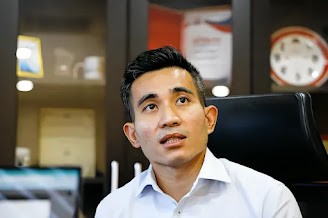
If the resurgent United Malays National Organization (UMNO) has any hope of restoring its traditional position at the apex of national politics, the party must win over ethnic non-Malays and the urban constituencies where they reside. That’s according to UMNO information chief Shahril Hamdan, 36, who spoke exclusively to Asia Times in a wide-ranging interview.

His view would likely be disputed by party conservatives who advocate a narrower platform championing the rights and state-sanctioned economic privileges of ethnic Malays, the majority population in Malaysia. But electoral arithmetic, Shahril argues, demands that the country is run “in a way that is relatable not just to the conservative base but to broader Malaysia.”

“UMNO in the past had managed to get support from urban, non-Malay constituencies. For UMNO’s survival, that has to come back because political urbanization is a one-way street and all the maps indicate that if we ever want to go back to some form of majoritarian dominance, we need urban support and non-Malay support, at least a significant minority of it,” he said.

The trouble for UMNO is that few voters, particularly those within urban areas, are actively clamoring to return to a time when the UMNO-led Barisan Nasional (BN) coalition governed with a supermajority. But what the electorate would likely agree on is the need for renewed stability after three years of uncharacteristic political dysfunction.

Read the full story at Asia Times.

Nile Bowie is a journalist and correspondent with the Asia Times covering current affairs in Singapore and Malaysia. He can be reached at nilebowie@gmail.com.
Friday, 15 July 2022

Malaysia’s Ismail is all talk on press freedom

Malaysian leader isn’t living up to his pledge to protect the press and uphold free expression


Malaysia’s Prime Minister Ismail Sabri Yaakob recently extended an olive branch to the media on National Journalists Day to reiterate his view that reporters should remain free to operate without any interference from outside parties, thereby ensuring their constitutionally-enshrined freedom of expression.

“I can give an assurance that the government has nothing to hide in the dissemination of information,” said Ismail, who claimed that ministries and agencies under his administration had always cooperated with and never obstructed media reporting, while also acknowledging the press as a “fourth estate” that contributes to national development.

While domestic media workers were Ismail’s intended audience, the premier’s remarks could also be interpreted as a response to Malaysia’s declining position on international press freedom rankings since the reformist Pakatan Harapan (PH) government’s collapse in 2020, which cut short its bid to rescind and amend laws that restrict and threaten the media.

To strengthen journalism in Malaysia, Ismail proposed during his May 29 speech the establishment of a study center to boost media professionalism and formation of a new journalist association, suggestions that media experts have pushed back against amid rising calls for Putrajaya to formalize instead the creation of an independent media council.

Read the full story at Asia Times.

Nile Bowie is a journalist and correspondent with the Asia Times covering current affairs in Singapore and Malaysia. He can be reached at nilebowie@gmail.com.
Tuesday, 5 July 2022

Exclusive: UMNO’s No 2 thinks Najib should go to jail

Deputy party leader tells Asia Times that ex-premier must ‘pay his dues’ in prison for 1MDB-related corruption

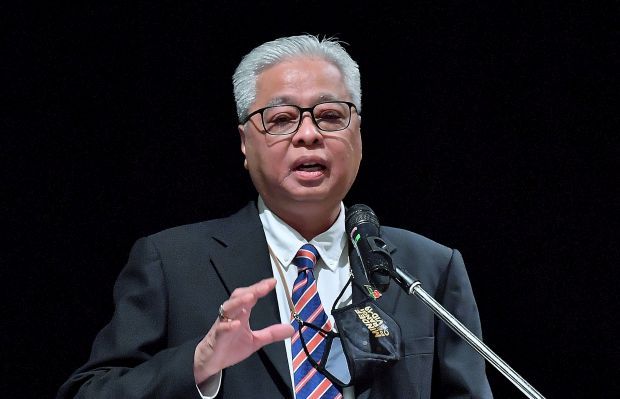
Mohamad Hasan, deputy president of the United Malays National Organization and deputy chairman of its ruling Barisan Nasional (BN) coalition, described Malaysia as a “struggling” country led by a “backdoor” government in a wide-ranging exclusive interview with Asia Times.

Mohamad, or Tok Mat as he is popularly known, also claimed the root of the nation’s current malaise stems from his party’s failure to “tell the truth” about the 1Malaysia Development Berhad (1MDB) financial scandal, adding that ex-premier Najib Razak should not expect special treatment from an UMNO-led government if he is eventually jailed on a slew of graft charges.

“The court is the place where you can prove whether you’re innocent or not. He didn’t prove it. He couldn’t prove it,” said Mohamad, cutting the figure of a maverick unafraid of speaking his mind. “Everybody has to pay their dues. But if we want to pardon, he (Najib) has to go through the process. He’ll have to go inside first.”

UMNO’s second-in-command went on to lament Malaysia’s purported failure to keep economic pace with its neighbors, stating that the formation of two successive governments “not out of a general election” but through parliamentary maneuvers had soured foreign investor sentiment and raised questions about the government’s democratic credibility.

Read the full story at Asia Times.

Nile Bowie is a journalist and correspondent with the Asia Times covering current affairs in Singapore and Malaysia. He can be reached at nilebowie@gmail.com.

Friday, 24 June 2022

Najib guns for judge who convicted him

Graft probe into judge who convicted former Malaysian premier called intimidation campaign against judiciary

Malaysia’s highest court will soon reach its final and incontestable conclusion on whether to uphold former prime minister Najib Razak’s landmark corruption conviction, a ruling that will leave the influential ex-leader either firmly emboldened as he mounts a political comeback or forced to adjust to life in a jail cell.

Lawyers for the 68-year-old politician recently filed a last-ditch bid to nullify his conviction and 12-year prison sentence handed down in July 2020 over the misappropriation of 42 million ringgit (US$9.5 million) from SRC International, a now-defunct investment vehicle of the infamous 1Malaysia Development Berhad (1MDB) state fund.

Najib’s legal team contends that the judge who handed down the historic ruling, Mohd Nazlan Mohd Ghazali, should be disqualified for a purported conflict of interest due to his previous stint as the general counsel of Maybank Group, a commercial lender to 1MDB that had played an advisory role in the establishment of SRC International.

A probe into the same sitting judge by the government’s anti-graft agency in response to unsubstantiated claims leveled by a fugitive blogger that Nazlan had pocketed stolen 1MDB funds has, meanwhile, shaken Malaysia’s legal fraternity and prompted the country’s chief justice to push back against “scurrilous attacks” leveled against the judiciary.

Read the full story at Asia Times.

Nile Bowie is a journalist and correspondent with the Asia Times covering current affairs in Singapore and Malaysia. He can be reached at nilebowie@gmail.com.
Friday, 3 June 2022

Inflation politics a game of chicken in Malaysia

PM Ismail defying UMNO elder calls for snap polls due to the impact of runaway poultry and other food prices on voters


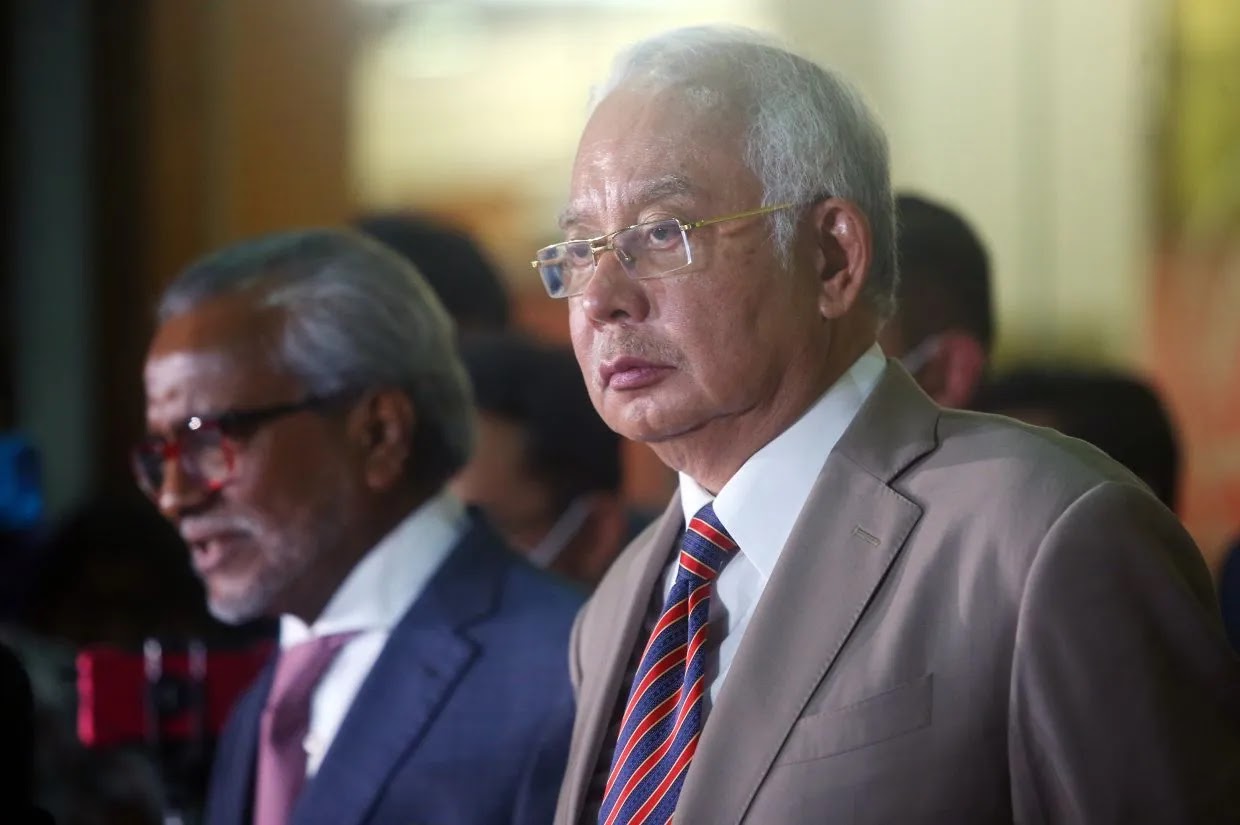
Malaysian Prime Minister Ismail Sabri Yaakob has few vote-winning achievements to claim after less than a year in office, which suggests he has little to gain and plenty to lose by calling an early election of which graft-tainted party leaders of his United Malays National Organization (UMNO) are aggressively lobbying.

Pointing to thumping wins in recent state elections and an opposition coalition in disarray, UMNO president Ahmad Zahid Hamidi says the electoral time is right for the party to reclaim its traditional political dominance. But Ismail has countered that fast-rising food inflation and basic living costs mean snap polls should be delayed until prices stabilize.

Malaysia’s next general election must be called by the third quarter of 2023, but UMNO-led governments have in the past held early elections to capitalize on political popularity or favorable economic conditions. UMNO suffered a historic defeat in 2018 but returned to power through parliamentary maneuvers and is now eyeing a redemptive victory.

Ismail, however, is adamant that the next election should not be held until the country can curb inflation, telling Nikkei Asia in a recent interview that his government would “have to wait for the right time” to dissolve parliament and call new polls. “We are now facing a period of increasing inflation with high prices… do you think this is the right time?”

Read the full story at Asia Times.

Nile Bowie is a journalist and correspondent with the Asia Times covering current affairs in Singapore and Malaysia. He can be reached at nilebowie@gmail.com.