Thursday, 29 July 2021

Emergency ends but crisis deepens in Malaysia

Monarch accuses government of sidelining his function and power, a royal rebuke the opposition claims is tantamount to treason


Malaysia’s constitutional monarch delivered an unprecedented rebuke of Prime Minister Muhyiddin Yassin’s administration on Thursday (July 29), accusing the government’s law minister of “misleading” Parliament over the alleged revocation of emergency ordinances that have been in effect since January to stem a rising tide of Covid-19 infections.

A strongly-worded statement issued by the Istana Negara, or national palace, accused the government of issuing “conflicting and confusing statements” earlier this week in Parliament that had not only “failed to respect the sovereignty” of the nation’s laws, but “sidelined the function and powers” of the king as enshrined in the federal constitution.

King Sultan Abdullah Sultan Ahmad Shah was “very disappointed” in particular by the conduct of de facto law minister Takiyuddin Hassan and Attorney-General Idrus Harun, who the palace said had failed to fulfill their promise to table and debate the annulment of the emergency ordinances in a special legislative session that opened on Monday (July 26).

The emergency proclamation, which the king assented to earlier this year, effectively suspended Parliament and state legislatures, disallowed elections and gave the premier powers to enact emergency ordinances without legislative scrutiny, supposedly to enable the Perikatan Nasional (PN) government to more effectively manage the health crisis.

Read the full story at Asia Times.

Nile Bowie is a journalist and correspondent with the Asia Times covering current affairs in Singapore and Malaysia. He can be reached at nilebowie@gmail.com.

Friday, 23 July 2021

Singapore not quite ready to live with Covid-19

City-state reimposes lockdown-like measures just weeks after saying Covid-19 would be treated as a manageable endemic disease


Wet markets, hawker centers and coffee shops have once again gone quiet after tighter Covid-19 restrictions were reinstated on July 22 to counter the highest incidence of community cases in 11 months, a development that health authorities say is a “huge setback” for the city-state’s reopening plans.

Despite making vaccination strides with the highest inoculation levels in the region, the threat of runaway infections fueled by the more transmissible Delta variant led the country to reimpose restrictions in place during May and June, prohibiting dining in at restaurants, closing indoor venues such as gyms, and limiting gatherings to two people.

After reporting very few locally transmitted cases in recent weeks, new infections rapidly mushroomed with major clusters at karaoke bars and a fishery port that soon spread to fresh seafood markets frequented by the elderly, a demographic given early priority for vaccination but with the lowest take-up rate among all eligible age groups.

Health Minister Ong Ye Kung told reporters on Wednesday (July 21) that stricter curbs were needed to prevent “an uncontrollable rise in cases, which could potentially result in many severe illnesses or even deaths” among unvaccinated seniors. He said that more than 200,000 residents over age 60 have yet to be immunized.

Read the full story at Asia Times.

Nile Bowie is a journalist and correspondent with the Asia Times covering current affairs in Singapore and Malaysia. He can be reached at nilebowie@gmail.com.

Monday, 19 July 2021

China’s vaccine diplomacy falters in SE Asia

Regional nations are abandoning Chinese vaccines for Western ones as evidence mounts Sinovac is less potent against the Delta strain


As Southeast Asia grapples with a record-breaking surge in Covid-19 infections and deaths, regional nations are turning away from Chinese-made vaccines in favor of Western-made shots amid growing evidence the former are less effective against the highly contagious Delta variant.

Beijing’s leading vaccine developers, private biopharmaceutical firm Sinovac Biotech and state-owned Sinopharm, have shipped hundreds of millions of doses worldwide and are key to the World Health Organization’s COVAX scheme aimed at distributing shots to poorer countries.

China’s indigenously developed vaccines, studies show, offer a measure of protection and are still considered to be highly effective against severe disease and hospitalization. They also are more easily stored and transported than certain Western-made jabs, making them comparatively cost-effective.

But it is increasingly less clear how well Chinese shots protect against more transmissible Covid-19 variants, not least the fast-spreading Delta strain that is now causing runaway caseloads and pushing regional health systems to the brink of collapse. Emerging data shows diminishing efficacy levels against variants in several major Covid-19 vaccines.

Read the full story at Asia Times.

Nile Bowie is a journalist and correspondent with the Asia Times covering current affairs in Singapore and Malaysia. He can be reached at nilebowie@gmail.com.

Wednesday, 14 July 2021

Politics and plague make a noxious mix in Malaysia

The nation's political and health crises are deepening in tandem


As Malaysia’s political dysfunction worsens, so too has the country’s health crisis. Successive days of record-shattering Covid-19 caseloads have followed a political rupture between the Perikatan Nasional (PN) coalition government and its largest component party, the United Malays National Organization (UMNO).

Daily infections hit an all-time high on Wednesday (July 14) with 11,618 cases. Despite a strict lockdown in force since June 1, the national infectivity rate, which stands at 1.16, is higher than it was before tough curbs on movement and economic activity were put in place. Record levels of severe illness and fatalities have been reported in recent days.

Noor Hisham Abdullah, Malaysia’s top health official, has attributed the surge to the spread of the highly infectious Delta variant, now the dominant coronavirus strain in the country. Cases breached the five-digit threshold for the first time on Tuesday with 11,079 infections, ravaging Kuala Lumpur and the surrounding states of Selangor and Negeri Sembilan.

Total cases now stand at 867,567 with over 6,385 coronavirus-related deaths. Malaysia has one of Southeast Asia’s highest per-capita infection rates, though with more than 400,000 vaccine doses now being dispensed daily, it also has one of its highest rates of inoculation. About 25% of its 32 million people have received at least one dose of a Covid-19 vaccine.

Read the full story at Asia Times.

Nile Bowie is a journalist and correspondent with the Asia Times covering current affairs in Singapore and Malaysia. He can be reached at nilebowie@gmail.com.

Thursday, 8 July 2021

Muhyiddin on his last political leg in Malaysia

PM's top coalition partner withdraws support for his leadership as political splits threaten to upend his now minority government


Malaysians woke up to political turmoil and uncertainty July 8 with the president of the largest party in the ruling Perikatan Nasional (PN) coalition, the United Malays National Organization (UMNO), announcing it has withdrawn its support for Prime Minister Muhyiddin Yassin and calling for his resignation.

But it remains to be seen whether the regime change gambit will succeed or backfire, with the embattled premier’s survival now depending in part on whether UMNO ministers serving in his government follow or ignore their party’s directive, opening the way for a potential political realignment if dissenting legislators are sacked.

UMNO leader Ahmad Zahid Hamidi issued the bombshell declaration at a late-night online press conference held after a meeting of the party’s supreme council, where he criticized the government’s handling of the Covid-19 pandemic and economy. Zahid said Muhyiddin had used a health-related national state of emergency to remain in power.

“UMNO urges Muhyiddin Yassin to withdraw honorably to enable a new prime minister to be appointed for a limited period,” said Zahid, adding that an interim premier should serve until the country achieves herd immunity, an 80% threshold that the government aims to reach through mass vaccination by December, and a general election is called.

Read the full story at Asia Times.

Nile Bowie is a journalist and correspondent with the Asia Times covering current affairs in Singapore and Malaysia. He can be reached at nilebowie@gmail.com.

Friday, 18 June 2021

Royal reproach limits Muhyiddin’s political options

Malaysian king contradicts premier’s timeline for reopening Parliament amid speculation a royally endorsed ‘unity’ government is in the offing


After a special meeting of Malaysia’s nine royal households, King Sultan Abdullah Sultan Ahmad Shah said on June 16 that Parliament, which was effectively suspended at the beginning of the year under an emergency decree on public health grounds, should reconvene as soon as possible.

In a reproach to Prime Minister Muhyiddin Yassin’s handling of the Covid-19 pandemic, the palace called for reducing bureaucracy, speeding up the national vaccine rollout, and allowing elected lawmakers to debate emergency ordinances and the government’s coronavirus recovery plan.

Despite fewer new infections since a nationwide lockdown went into effect on June 1, Malaysia still has the highest number of Covid-19 cases per capita in Southeast Asia. The acute health crisis prompted the king to summon political party leaders for dialogue, culminating in a special meeting of the Conference of Rulers (CoR) earlier this week.

A separate statement by the CoR, a powerful but mainly ceremonial body that includes the king and eight other hereditary sultans, concluded there wasn’t sufficient cause to extend the nationwide state of emergency, which gives the premier enhanced powers to enact new laws and approve spending, beyond its original end date of August 1.

Read the full story at Asia Times.

Nile Bowie is a journalist and correspondent with the Asia Times covering current affairs in Singapore and Malaysia. He can be reached at nilebowie@gmail.com.

Friday, 11 June 2021

Myanmar’s crisis becomes ASEAN’s shame

ASEAN-led mediation has wholly failed to de-escalate Myanmar's crisis underscoring the bloc's enduring impotence in times of need


Fire and flames ate away at the flag of the Association of Southeast Asian Nations (ASEAN) during heated protests on the streets of Mandalay, Myanmar’s second-largest city, last weekend after two emissaries from the regional organization met with junta chief Senior General Min Aung Hlaing.

ASEAN chairman Lim Jock Hoi and Brunei’s Second Minister for Foreign Affairs Erywan Pehin Yusof visited Naypyitaw on June 4 to discuss the appointment of the grouping’s special envoy and delivery of humanitarian aid, but departed amid questions of whether the Bruneian diplomats had inadvertently legitimized Myanmar’s military regime.

By Tuesday (June 8) morning, a statement on the visit was removed from the ASEAN secretariat’s website after it had referred to the senior general and chief architect of February’s coup as the “Chairman of the State Administrative Council” (SAC) – in other words, the leader of the country rather than the leader of the armed forces.

The diplomatic gaffe, coupled with the slow pace of progress on implementing the five-point consensus reached by ASEAN leaders at an April 24 meeting in Jakarta, has sown fury among opponents of the military takeover in Myanmar and fueled rising criticism among the region’s commentariat of Brunei’s management of the crisis as ASEAN’s chair.

Read the full story at Asia Times.

Nile Bowie is a journalist and correspondent with the Asia Times covering current affairs in Singapore and Malaysia. He can be reached at nilebowie@gmail.com.

Friday, 4 June 2021

Singapore on the winning side of Covid-19 fight

City-state has contained latest outbreak better than its neighbors and is determined to overcome the 'Covid zero' dilemma


As Southeast Asia struggles to contain a Covid-19 resurgence, Singapore has so far avoided the harsh fate of neighboring nations that have fallen ill to second waves of infection far deadlier than the first. But the island nation is determined not to become a victim of its virus-curbing success.

Nearly three weeks since re-imposing lockdown-like conditions to arrest its largest Covid-19 community outbreak in months, daily infections in the city-state are only a fraction of those recorded in neighboring countries, even though all four variants of concern (VOCs) have been detected locally.

To mount a stronger defense against the more contagious strains, including those first identified in the United Kingdom, South Africa, Brazil and India, the island nation has recalibrated its vaccine strategy to prioritize first dosage so that a wider segment of the population receives immune benefits more quickly.

It has also opened up its vaccination program to adolescents and teenagers before completing inoculations of adults, making it one of the first countries in the world to do so. Around one-quarter of the population has been fully vaccinated so far, more than almost anywhere else in Asia, where Covid-19 vaccination campaigns have been sluggish.

Read the full story at Asia Times.

Nile Bowie is a journalist and correspondent with the Asia Times covering current affairs in Singapore and Malaysia. He can be reached at nilebowie@gmail.com.
Monday, 31 May 2021

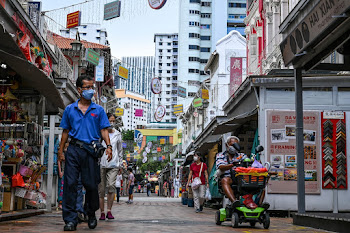
Malaysia teeters on edge of Covid-19 catastrophe

Government wholly fails to contain viral outbreak as record number of cases pushes daily infection rate higher than India's


Malaysia’s health crisis is taking a turn for the worst as new Covid-19 cases rise exponentially, a viral surge that as a percentage of the population is now higher than India’s daily infection rate. 

With a record number of critically ill patients occupying almost 1,200 intensive care unit (ICU) beds, the healthcare system is at a breaking point amid reports of doctors giving priority care to patients with higher chances of recovery.

The Muslim-majority nation has seen a dramatic five-fold rise in cases since the beginning of the year and consecutive days of record-high daily caseloads in the thousands following the Eid al-Fitr holiday. Recent infections are being traced to gatherings held in violation of social distancing and movement restrictions during the end of the month-long Ramadan fasting period.

Daily transmissions have far outpaced Ministry of Health (MoH) forecasts, which were projected to cross the 8,000-case threshold by around June 5 if safety guidelines, or what Malaysia calls standard operating procedures (SOPs), were not complied with.

Read the full story at Asia Times.

Nile Bowie is a journalist and correspondent with the Asia Times covering current affairs in Singapore and Malaysia. He can be reached at nilebowie@gmail.com.

Wednesday, 26 May 2021

New 1MDB suits set to sink Najib’s comeback

Malaysian ex-premier faces more legal trouble in 1MDB civil suits that also aim at JP Morgan, Deutsche Bank and PetroSaudi


Synonymous with one of the world’s greatest financial heists, Malaysia’s now-defunct state fund 1Malaysia Development Bhd (1MDB) is ramping up its pursuit of stolen assets with new legal action against foreign financial institutions and individuals like former premier Najib Razak and fugitive businessman Low Taek Jho.

1MDB and its former subsidiary SRC International Sdn Bhd filed 22 civil suits seeking over US$23 billion at courts in Kuala Lumpur earlier this month, marking a new phase of efforts by Malaysia to recover funds lost to the globe-spanning embezzlement scandal.

An unnamed source told The Edge business daily, which on May 10 initially reported the filing of the suits, the moves were a sign that Prime Minister Muhyiddin Yassin and his ruling Perikatan Nasional (PN) are serious about pursuing wrongdoers linked to the scheme amid public restlessness with the slow pace of various 1MDB-linked criminal cases.

The litigation will also act to deepen an already wide rift within Muhyiddin’s governing coalition, which derives crucial support from graft-ensnared allies of Najib, who is increasingly at risk of losing his political rights to stand as a candidate in future elections pending court decisions.

Read the full story at Asia Times.

Nile Bowie is a journalist and correspondent with the Asia Times covering current affairs in Singapore and Malaysia. He can be reached at nilebowie@gmail.com.